
The tankless water heater vs tank question comes up on nearly every water heater replacement we quote, and there is no single right answer. At Riley Plumbing Heating and Air Conditioning, we have installed both types in homes across Gardnerville, Minden, Genoa, Carson City, and South Lake Tahoe for more than twenty years, and the best choice depends on your household, your fuel type, your plumbing, and how long you plan to stay in the house. Here is how we walk homeowners through the decision, without the sales pitch.
How Each System Actually Works
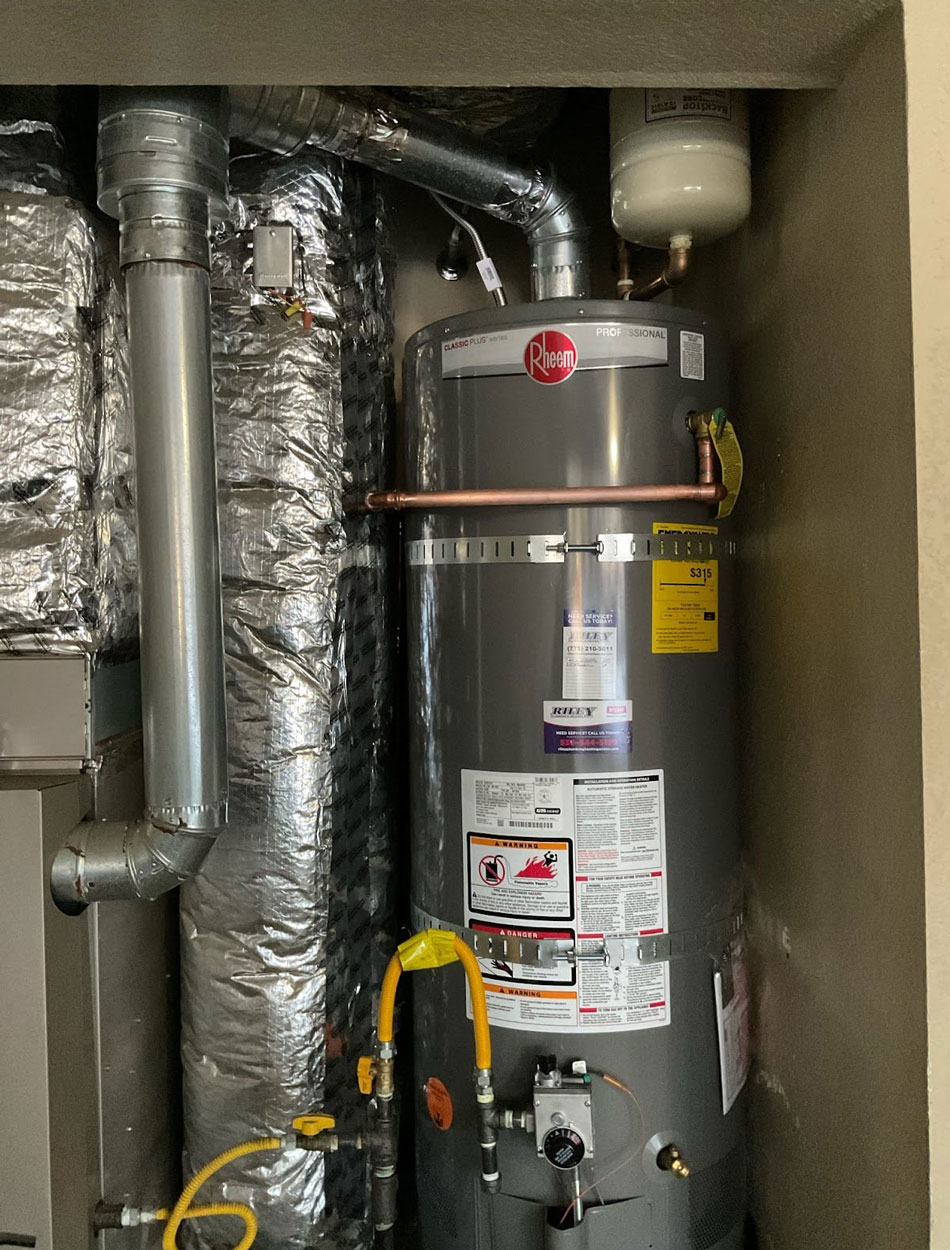
A conventional storage water heater keeps thirty to eighty gallons of water hot around the clock inside an insulated tank. When you open a faucet, hot water leaves the top of the tank and cold water enters the bottom to be reheated. It is simple, proven technology, and it has been the standard in American homes for decades.
A tankless unit heats water only when you ask for it. Open a hot tap and a flow sensor fires a gas burner or electric element that raises the water temperature as it passes through a heat exchanger. Nothing is stored and nothing is reheated overnight. Understanding that difference is the foundation of the tankless water heater vs tank comparison, because almost every advantage and drawback on either side traces back to it.
Upfront Cost and Installation
Cost is usually where the conversation starts. A storage tank is the less expensive option to purchase and the faster one to install, especially when we are replacing an existing tank in the same location with the same venting and connections. Many of the tank replacements Riley Plumbing Heating and Air Conditioning performs are finished in a single visit.
Tankless units cost more upfront, and the installation is more involved. Gas models often need a larger gas line, a dedicated vent, and a condensate drain. Electric models may require a substantial electrical upgrade. When homeowners weigh tankless water heater vs tank purely on the invoice, the tank wins. The picture changes when you look at what happens over the next fifteen or twenty years.
Energy Use and Monthly Bills
A storage tank loses heat through its walls continuously, a phenomenon called standby loss. Your water heater is reheating water at two in the morning whether anyone uses it or not. Tankless systems eliminate that loss entirely, which is why they typically use noticeably less energy in a comparable household.
The savings scale with how you use hot water. A home that uses a modest amount spread through the day sees the biggest percentage improvement. A large household running back-to-back showers and laundry sees a smaller relative gain, because the burner is working most of that time either way. Riley Plumbing Heating and Air Conditioning looks at your actual usage before promising anything, because energy estimates printed on a box rarely match a real house in the Carson Valley.
Hot Water Supply and Household Demand
This is where the tankless water heater vs tank decision gets practical. A tank holds a finite amount of hot water. Drain it and you wait thirty to sixty minutes for recovery, which is the classic complaint from families with teenagers or homes with a large soaking tub.
A tankless unit never runs out, but it is limited by flow rate rather than volume. It can only raise the temperature of so many gallons per minute, and that capacity drops as incoming water gets colder. Our winters matter here. Groundwater temperatures in Northern Nevada and around Lake Tahoe fall well below the conditions manufacturers use for their headline ratings, so a unit that delivers plenty in a mild climate can disappoint in January if it was sized on the brochure. Riley Plumbing Heating and Air Conditioning sizes for the coldest month, not the average one, and in larger homes we sometimes recommend two units or a small buffer tank.
Lifespan, Maintenance, and Our Hard Water
A well-maintained storage tank generally lasts eight to twelve years. A tankless unit often runs fifteen to twenty, and its heat exchanger and internal parts can be replaced rather than replacing the whole appliance. That longevity is a real point in the tankless column, and it is why the tankless water heater vs tank math often favors tankless for homeowners planning to stay put.
There is a condition attached. Our water is mineral-rich, and scale is the enemy of a tankless heat exchanger. These systems need to be descaled roughly once a year to hold their efficiency and reach that long lifespan. Tanks need attention too, including an annual flush and anode rod inspection, but they are more forgiving of neglect. Riley Plumbing Heating and Air Conditioning handles descaling and flushing under our maintenance agreements, and we frequently pair a tankless installation with a water treatment or softening system, so the scale problem is solved at the source rather than fought every year.
Space, Venting, and What Your Home Allows
Sometimes the house decides for you. A tankless unit mounts on a wall and frees up the floor space a tank occupies, which matters in a tight utility closet, a small garage, or a Tahoe cabin where every square foot counts. On the other hand, if your existing gas line is undersized and running a new one means opening walls, the cost of going tankless climbs quickly.
Riley Plumbing Heating and Air Conditioning evaluates gas capacity, venting routes, electrical service, and the location of your existing unit before recommending either direction. That site visit is the difference between an accurate quote and a surprise on installation day.
Which One We Recommend
If you need a straightforward replacement, want the lowest upfront cost, or plan to sell within a few years, a quality storage tank is a sound choice, and we install plenty of them. If you are staying in the home, want lower operating costs, need endless hot water for a busy household, or are reclaiming space, tankless usually earns its higher price over time.
What we will not do is push one answer on every house. The right resolution to tankless water heater vs tank comes from your fuel type, hot water habits, budget, and plumbing, and Riley Plumbing Heating and Air Conditioning would rather size the correct system than sell the more expensive one.
Talk To Riley Plumbing Heating and Air Conditioning
Riley Plumbing Heating and Air Conditioning is a locally owned plumbing, heating, and cooling company serving the Carson Valley, Northern Nevada, and the Lake Tahoe basin with water heater installation, repair, and maintenance, along with complete plumbing, HVAC, and water treatment services. We are licensed, bonded, and insured, financing is available, and qualifying equipment carries manufacturer warranties of up to ten years. Still weighing tankless water heater vs tank for your home? Request an online water heater quote or call us at 775-293-8855 in Nevada or 530-564-8855 in California, and we will help you choose with confidence.
Back to Blog