
I get this question all the time from homeowners across the Carson Valley: how often to pump your septic tank. It is one of those maintenance tasks that is easy to forget about until something goes wrong, and by then the fix is a lot messier and more expensive than a routine pump out would have been. As someone who has spent more than twenty years working on homes throughout this area, I want to walk you through what actually determines your pumping schedule, the warning signs that tell you it is time, and why staying ahead of this one task can save you thousands of dollars down the road. At Riley Plumbing Heating and Air Conditioning, septic care is one of the services I am asked about most, so let me give you the straight answer.
Why Septic Tank Pumping Matters
Your septic tank is doing quiet, constant work every single day. Wastewater flows in, solids settle to the bottom, oils and grease float to the top, and the relatively clear water in the middle flows out to your drain field. Over time, the solid layer at the bottom builds up. If it is never removed, it eventually takes up so much space that solids start flowing out with the wastewater and into your drain field, where they can clog the soil and cause a failure that is far more expensive to repair than the tank itself. Regular pumping is what keeps that entire system working the way it was designed to.
The General Rule for How Often to Pump a Septic Tank
For most households, the answer to how often to pump your septic tank falls somewhere between every three to five years. That said, this is a general guideline, not a hard rule, because your actual timeline depends on a handful of factors that are specific to your home. Tank size is the biggest one. A larger tank simply holds more before it needs servicing, while a smaller or older tank may need attention more frequently. Household size matters too, since more people in the home means more water and waste flowing through the system every day. I also look at whether a garbage disposal is in regular use, because that alone can shorten the interval significantly by adding more solid waste to the tank. Water usage habits, from long showers to frequent laundry loads, play a role as well. When homeowners ask me how often to pump a septic tank for their specific property, I always start by looking at these details rather than giving a blanket answer.
Signs You Need to Schedule a Pump Out Sooner
Even with a general schedule in mind, your septic system will usually give you warning signs before it reaches a breaking point. Slow drains throughout the house, especially when more than one fixture is affected at once, often point to a tank that is nearing capacity. Gurgling sounds coming from your pipes are another early indicator. Standing water or unusually lush, green patches of grass over your drain field can mean effluent is surfacing where it should not be. A sewage odor near the tank or drain field is one of the clearer signs that something needs attention right away. If you notice any of these, do not wait for your scheduled interval. Call Riley Plumbing Heating and Air Conditioning and we will get a technician out to assess the system before a small issue becomes a full septic failure.
What Happens During a Professional Septic Pumping
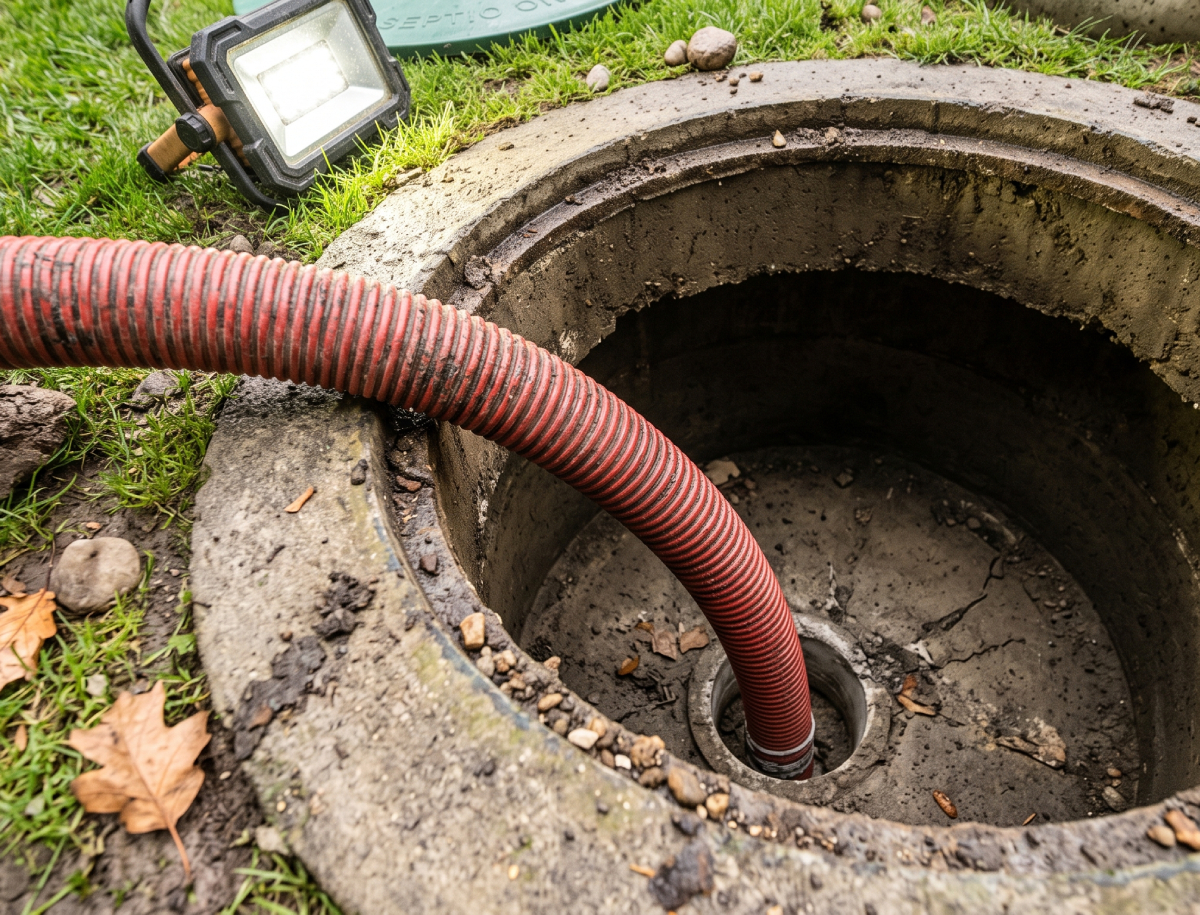
A lot of homeowners are not entirely sure what a pumping service involves, so I like to walk people through it. Our technicians locate and uncover the tank access points, then use professional vacuum equipment to remove the accumulated solids, sludge, and scum layers from the tank. While we are there, we also inspect the tank walls, baffles, and overall structure for cracks, corrosion, or other damage that could affect performance down the line. This is also a good opportunity to check the effluent filter, if your system has one, and make sure the drain field is showing no early signs of trouble. Riley Plumbing Heating and Air Conditioning technicians are trained to catch these smaller issues during a routine visit, which is often how we help homeowners avoid a bigger repair later.
Factors That Can Shorten Your Septic Pumping Schedule
Beyond the basics of tank size and household size, a few habits tend to accelerate how quickly a tank fills. Flushing anything other than human waste and toilet paper, including wipes labeled flushable, paper towels, or feminine hygiene products, adds solid material that does not break down the way it should. Pouring grease or cooking oil down the kitchen sink is another common culprit, since it can solidify inside the tank and pipes. Running a garbage disposal frequently sends a steady stream of food solids into the tank as well. If any of this sounds familiar, you may want to plan for pumping on the earlier end of that three-to-five-year window rather than the later end.
Why Regular Septic Maintenance Pays Off
I always tell homeowners that septic maintenance is one of those areas where being proactive costs far less than being reactive. A routine pump out is a straightforward, predictable expense. A drain field failure caused by years of neglect can mean replacing part or all your drain field, which is a significant excavation project and one of the more costly repairs a homeowner can face. Staying on a consistent schedule protects that investment and gives you peace of mind that your system is working the way it should, especially during the busier months when your household is using water more heavily.
Trust Riley Plumbing Heating and Air Conditioning With Your Septic System
At Riley Plumbing Heating and Air Conditioning, we have been serving homeowners throughout the Carson Valley and surrounding areas for more than twenty years, and septic care is one of the many ways we keep your home running smoothly. Our trucks are fully stocked, our technicians are licensed, bonded, and insured, and we are committed to solving problems completely in a single visit whenever possible. If you are not sure how often to pump your septic tank at your property, or if you are noticing any of the warning signs I mentioned above, give us a call. Riley Plumbing Heating and Air Conditioning is here to help you protect your home and keep your septic system running the way it should for years to come.
Call (775) 293-8855 or use our online form to schedule a service today.
Back to Blog